If you are considering dental implants, you may hear two terms,Guided implant surgery and Freehand implant surgery.Bothmethods are used worldwide. Both can succeed when performed correctly. However, they differ in planning structure,precision control, and predictability.Understanding the difference helps you evaluate how seriously a clinic approachesimplant planning—especially when traveling internationally.
What Is Freehand Implant Surgery?
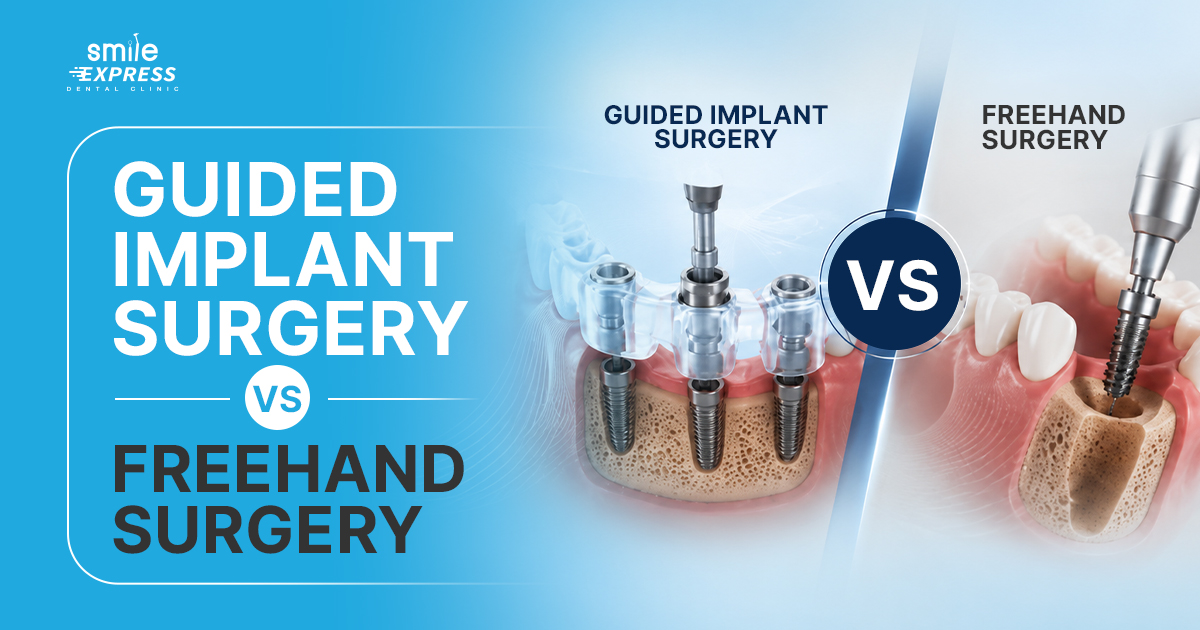
Freehand implant surgery is the traditional method of placing dental implants.
During the procedure, the dentist positions the implant manually using a combination of:
- Clinical experience
- Visual judgement
- Pre-operative imaging
- Anatomical knowledge
- Tactile feedback during drilling
Rather than following a physical surgical guide, the implant position is determined by the surgeon’s skill and real-time assessment during the procedure.
For experienced implant dentists, freehand surgery can produce excellent outcomes, particularly in straightforward cases with good bone quality and uncomplicated anatomy.
Some of the advantages of freehand implant surgery include:
- Greater flexibility during surgery
- No need to fabricate a surgical guide
- Suitable for routine single implant cases
- Proven long-term clinical success when performed by experienced surgeons
However, because implant positioning depends heavily on the operator’s judgement, treatment outcomes may vary depending on the complexity of the case and the surgeon’s experience.
What Guided implant surgery uses?
Guided implant surgery combines digital planning with advanced surgical technology to improve treatment precision.
Before surgery begins, a CBCT scan and digital impressions are used to create a three-dimensional treatment plan. Based on this plan, a custom surgical guide is fabricated specifically for the patient.
During the procedure, the guide fits securely over the teeth or gums and directs the implant drills into the planned position, helping control the angle, depth, and location of implant placement.
Unlike freehand surgery, guided implant placement follows a prosthetically driven approach. This means the implant is positioned according to where the final crown or restoration should ideally be placed, rather than relying solely on surgical judgement.
This level of digital planning helps improve consistency and is particularly valuable in cases requiring precise implant positioning.
Guided Implant Surgery vs Freehand Surgery
| Feature | Guided Implant Surgery | Freehand Implant Surgery |
|---|---|---|
| Treatment planning | Digital 3D planning before surgery | Based on clinical judgement and pre-operative imaging |
| Implant placement | Guided by a custom surgical template | Positioned manually by the surgeon |
| Precision | Highly controlled position, angle, and depth | Depends on surgical skill and experience |
| Predictability | High, especially for complex cases | Varies depending on case complexity |
| Best suited for | Complex implant cases, multiple implants, full-arch rehabilitation | Straightforward single implant cases with favourable anatomy |
Neither technique is universally “better.” The most appropriate approach depends on the patient’s anatomy, treatment goals, and the experience of the implant surgeon.
Precision Is One of the Biggest Differences
One of the most significant differences between guided and freehand implant surgery is the level of precision during implant placement.
With freehand surgery, the implant position is determined by the surgeon’s clinical judgement throughout the procedure.
With guided surgery, the position, angle, and drilling depth are digitally planned before treatment even begins.
This digital workflow helps minimise variability and provides an additional level of accuracy, particularly when implants need to be placed close to important anatomical structures such as nerves or the maxillary sinus.
While experienced surgeons can achieve excellent results using freehand techniques, guided surgery offers greater consistency by translating digital treatment planning directly into the surgical procedure.
Technology Supports Clinical Expertise
Although guided surgery provides greater planning accuracy, technology should never replace clinical judgement.
A surgical guide is only as effective as the treatment plan behind it.
Likewise, an experienced implant surgeon performing freehand surgery may achieve outstanding results in suitable cases.
The ideal approach combines:
- Comprehensive diagnosis
- Digital treatment planning
- Clinical experience
- Prosthetic-driven implant positioning
- Careful surgical execution
Modern implant dentistry is most successful when advanced technology works alongside professional expertise—not as a substitute for it.
Frequently Asked Questions
Is guided implant surgery better than freehand surgery?
Not necessarily. Guided surgery offers greater precision and predictability, especially for complex cases. However, experienced implant surgeons can also achieve excellent outcomes using freehand techniques in appropriate clinical situations.
Does guided implant surgery make treatment safer?
Digital planning helps improve accuracy and allows the implant position to be carefully evaluated before surgery begins. While no surgical procedure is completely risk-free, guided surgery can reduce the likelihood of positioning errors in appropriate cases.
Is freehand implant surgery still used today?
Yes. Freehand implant surgery remains a widely accepted and successful technique. For straightforward cases, experienced implant dentists can achieve highly predictable outcomes using the freehand approach.
Which implant technique is better for international patients?
For patients travelling overseas for dental treatment, guided implant surgery may provide additional confidence because much of the planning is completed before arrival. This can help improve efficiency, support accurate implant placement, and reduce unexpected changes during treatment.
Considering dental implants ?
Our experienced implant specialists can review your dental X-rays or CBCT scans, assess your bone condition, and determine whether guided or freehand implant surgery is the most appropriate approach for your individual case. Book a consultation today: https://www.smileexpressdental.com/contact-us/