Recovering from dental surgery doesn’t end when you leave the clinic. What you eat during the first few days plays an important role in protecting the surgical site, reducing discomfort, and supporting the natural healing process.
Whether you’ve undergone dental implant surgery, wisdom tooth removal, bone grafting, or full-mouth rehabilitation, choosing the right foods can make your recovery more comfortable while helping to minimise unnecessary irritation.
Bangkok offers a wide variety of soft, nutritious meals that are easy to find in restaurants, supermarkets, convenience stores, and food delivery services. With a little planning and by following your dentist’s recommendations, eating well after dental treatment can be both simple and enjoyable.
Why Your Diet Matters After Dental Surgery
The food you eat after surgery directly affects your recovery.
During the early healing phase, the surgical site is delicate and can be easily irritated by foods that are too hot, too hard, or require excessive chewing.
Choosing appropriate foods helps to:
- Protect the healing tissues.
- Reduce discomfort while eating.
- Lower the risk of disrupting the surgical site.
- Support tissue repair.
- Maintain adequate nutrition during recovery.
Following your dentist’s dietary instructions is just as important as taking prescribed medications and maintaining good oral hygiene.
What to Eat During the First 24–48 Hours
The first two days after surgery are the most important for protecting the blood clot and allowing the initial healing process to begin.
During this period, focus on foods that are:
- Soft in texture
- Cool or room temperature
- Easy to swallow
- Mildly seasoned
- Low in chewing effort
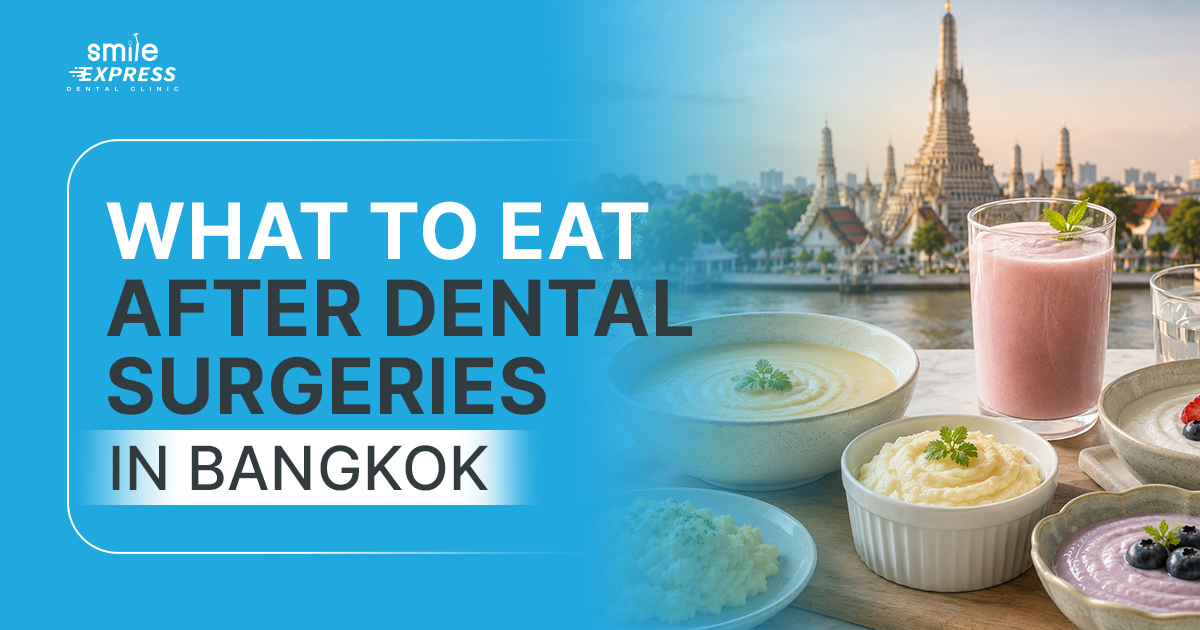
Recommended food choices available throughout Bangkok include:
| Recommended Foods | Why They’re Suitable |
|---|---|
| Plain yogurt | Soft, cool, and gentle on healing tissues |
| Smoothies (without seeds) | Nutritious and easy to consume without chewing |
| Soft tofu | High in protein with a soft texture |
| Mashed potatoes | Easy to swallow and filling |
| Rice congee (Jok) | Traditional Thai rice porridge that requires minimal chewing |
| Protein shakes | Convenient source of protein during early recovery |
Bangkok’s supermarkets, convenience stores, and food delivery services make these options widely available throughout the city.
Foods to Avoid During the First 24–48 Hours
Just as important as choosing the right foods is avoiding anything that could interfere with healing.
The following foods and drinks should be avoided immediately after surgery:
| Avoid | Why |
|---|---|
| Hot soups and hot drinks | Heat may increase bleeding or irritation. |
| Spicy foods | Can irritate healing tissues. |
| Crunchy foods | May damage the surgical site. |
| Hard foods | Require excessive chewing and pressure. |
| Alcohol | May interfere with healing and prescribed medications. |
| Drinking through a straw | Suction may dislodge the blood clot after extractions. |
Protecting the surgical area during these first two days creates the best environment for uncomplicated healing.
What to Eat on Days 3–5
As swelling and discomfort begin to improve, you can gradually expand your diet while still choosing foods that are soft and easy to chew.
Many traditional Thai dishes naturally fit these recommendations when prepared with mild seasoning.
Good choices include:
| Recommended Foods | Benefit During Recovery |
|---|---|
| Soft rice dishes | Gentle on healing tissues |
| Scrambled eggs | Excellent source of protein |
| Steamed fish | Soft texture and high nutritional value |
| Soft noodles | Easy to chew and digest |
| Clear soups | Help maintain hydration |
| Steamed vegetables | Provide vitamins while remaining easy to chew |
| Soft pasta | Comfortable option during healing |
If dining in Bangkok restaurants, you can usually request dishes to be prepared “Not spicy” or “No chili.” Most restaurants are happy to accommodate these requests for international visitors.
What to Eat After 5–7 Days
As healing progresses and your dentist confirms that the surgical site is stable, you can gradually reintroduce a wider variety of foods.
Although eating becomes more comfortable, it’s still important to avoid foods that place excessive pressure on the healing tissues.
Suitable food choices during this stage include:
| Recommended Foods | Why They’re Appropriate |
|---|---|
| Tender chicken | Soft texture and high in protein |
| Soft meats | Easier to chew than tougher cuts |
| Soft fruits | Gentle on healing tissues while providing vitamins |
| Rice dishes | Comfortable and filling |
| Soft pasta | Requires minimal chewing |
Even if your recovery is progressing well, continue avoiding foods that could interfere with healing.
| Continue to Avoid | Why |
|---|---|
| Hard nuts | May damage healing tissues |
| Crispy fried foods | Sharp edges can irritate surgical sites |
| Tough meats | Require excessive chewing |
| Sticky candy | Can adhere to surgical areas |
| Chewing ice | May place excessive force on healing tissues |
Healing continues beneath the surface for several weeks, even if discomfort has already improved. Following your dentist’s advice helps support predictable recovery.
Grocery Stores and Food Delivery Options in Bangkok
One advantage of recovering in Bangkok is the wide availability of soft food options.
International supermarkets, convenience stores, and food delivery services make it easy to find suitable meals without needing to cook.
Patients can purchase recovery-friendly foods from:
- International supermarkets
- Local grocery stores
- Convenience stores such as 7-Eleven, Tops, and Lawson
- Food delivery platforms including GrabFood, foodpanda, and LINE MAN
Whether you’re staying in a hotel, serviced apartment, or recovery accommodation, nutritious meals are generally easy to access throughout Bangkok.
Frequently Asked Questions
Can I eat Thai food after dental surgery?
Yes. Many Thai dishes are naturally soft and suitable during recovery. Rice congee, clear soups, steamed fish, soft noodles, and steamed vegetables are all good choices.
When ordering at restaurants, simply ask for your meal to be “Not spicy” or “No chili.”
When can I return to my normal diet?
Most patients can begin introducing a wider variety of foods after 5–7 days, provided healing is progressing normally.
However, hard foods, nuts, crispy snacks, tough meats, and sticky sweets should still be avoided until your dentist confirms that the surgical site has healed sufficiently.
Why should I avoid drinking through a straw?
After tooth extraction or certain oral surgeries, using a straw creates suction inside the mouth.
This suction may dislodge the protective blood clot, increasing the risk of complications such as dry socket and delaying healing.
For this reason, it is generally recommended to avoid straws during the early stages of recovery.
Why is protein important after dental surgery?
Protein provides the nutrients your body needs to repair soft tissues and support wound healing.
Soft protein-rich foods such as eggs, yogurt, tofu, fish, and protein shakes are excellent choices during recovery and can help promote faster healing.
Is it safe to dine out after dental surgery?
For minor procedures, many patients feel comfortable dining out after a few days, provided they choose soft, mild foods.
Following more extensive treatments—such as multiple dental implants, bone grafting, or full-mouth rehabilitation—many patients prefer to stay in their hotel or apartment during the first few days and use food delivery services until eating becomes more comfortable.
Planning dental treatment in Bangkok and have questions about recovery?
Our experienced dental team can provide personalised advice on what to eat after your procedure, expected healing times, and how to care for your mouth during recovery.
Whether you’re having dental implants, bone grafting, wisdom tooth removal, or full-mouth rehabilitation, we’ll help you prepare with a customised treatment and aftercare plan before you travel.Book a consultation Today : https://www.smileexpressdental.com/contact-us/